How to Check If ChatGPT Recommends Your Brand
A simple, repeatable method to see whether ChatGPT, Gemini, Perplexity and Google AI answers name your business, which pages they cite and what to fix when they do not.
Read the guideAnswer Engine Optimization and Generative Engine Optimization explained in plain language, how they differ, how they overlap with SEO and how to run them together.
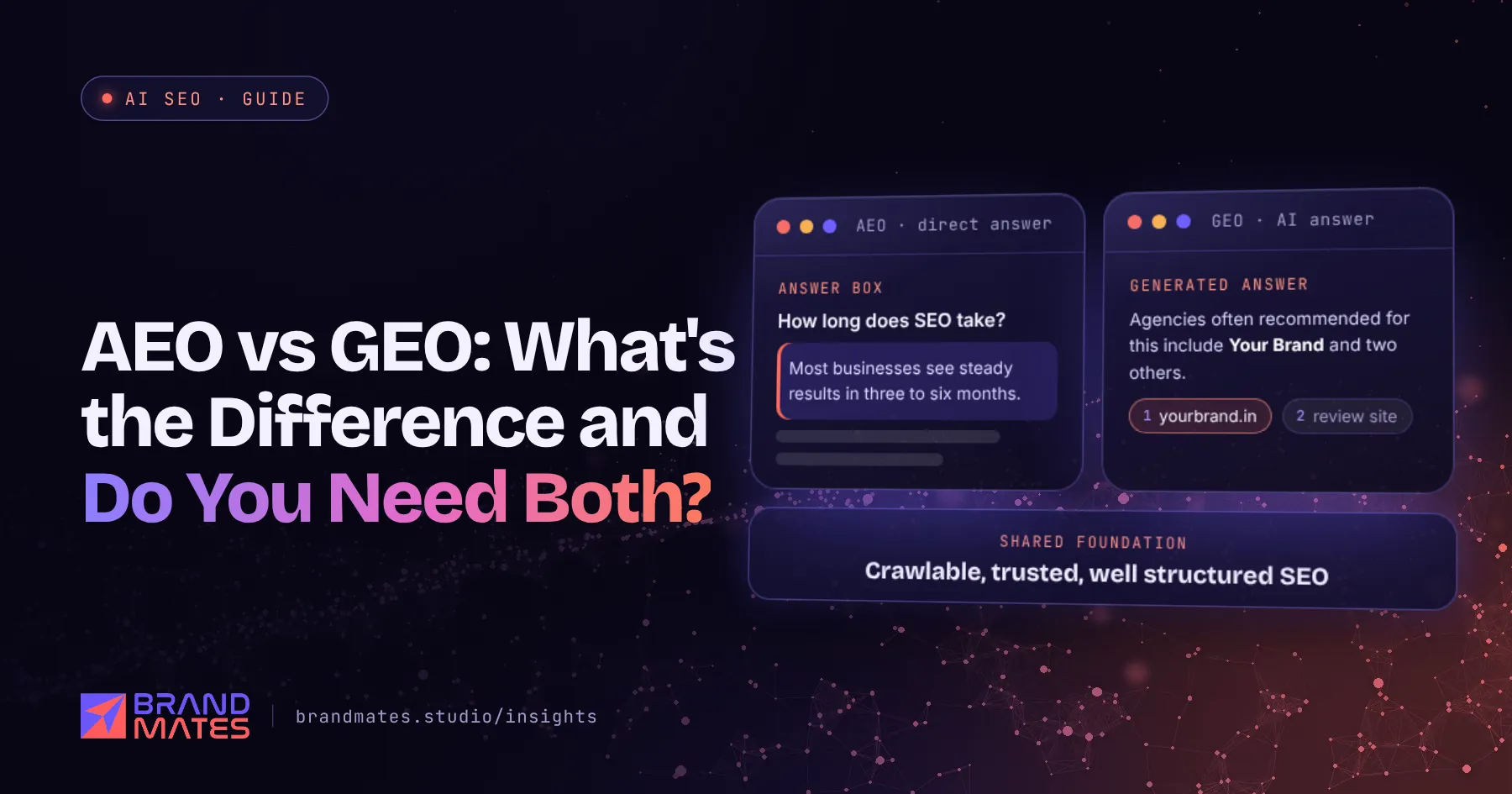
Every few months a new acronym appears in search marketing. Two have stuck: AEO and GEO. Agencies sell them as separate services, articles argue about which one matters more, and business owners are left wondering whether they need one, both or neither.
This guide explains AEO vs GEO in plain language: what each term means, how they differ, where they overlap with traditional SEO and how we recommend running them. It is part of our complete AI SEO guide, which covers the full framework.
Answer Engine Optimization is the work of making your content the source a system quotes when it answers a direct question.
The idea is older than ChatGPT. It grew up around Google's featured snippets and voice assistants, where one answer is read out or shown above the results. Today it applies to AI Overviews, AI Mode, ChatGPT, Perplexity and every other tool that answers questions directly.
AEO is about the page and the passage. When someone asks "how much does a drone light show cost in India", AEO asks: does your page contain a clear, specific, credible answer that a machine can extract and attribute to you?
Typical AEO work includes:
Generative Engine Optimization is the work of making your brand appear when an AI system generates a recommendation, comparison or shortlist.
The term was popularised by a 2023 research paper from researchers at Princeton University, IIT Delhi and other institutions, which studied how content changes affect visibility in generative search answers.
GEO is about the brand and the entity. When someone asks "which agencies in India handle both SEO and web development", there may be no single page that answers it. The model builds the answer from everything it has seen about the businesses in that category. GEO asks: is your brand described consistently enough, across enough trustworthy sources, that the model includes you?
Typical GEO work includes:
| AEO | GEO | |
|---|---|---|
| Main question | Will my page be quoted as the answer? | Will my brand be named in the recommendation? |
| Unit of focus | A page or passage | The brand as an entity |
| Typical query | "How long does SEO take?" | "Which SEO agencies in Delhi work with Shopify stores?" |
| What wins | Clear, specific, well structured answers | Consistent information and third party credibility |
| Main levers | Content structure, FAQs, schema, crawlability | Mentions, reviews, directories, entity data, PR |
| How you see success | Your URL cited as a source | Your brand named, ideally near the top |
| Where it overlaps with SEO | On page and technical SEO | Authority building and local SEO |
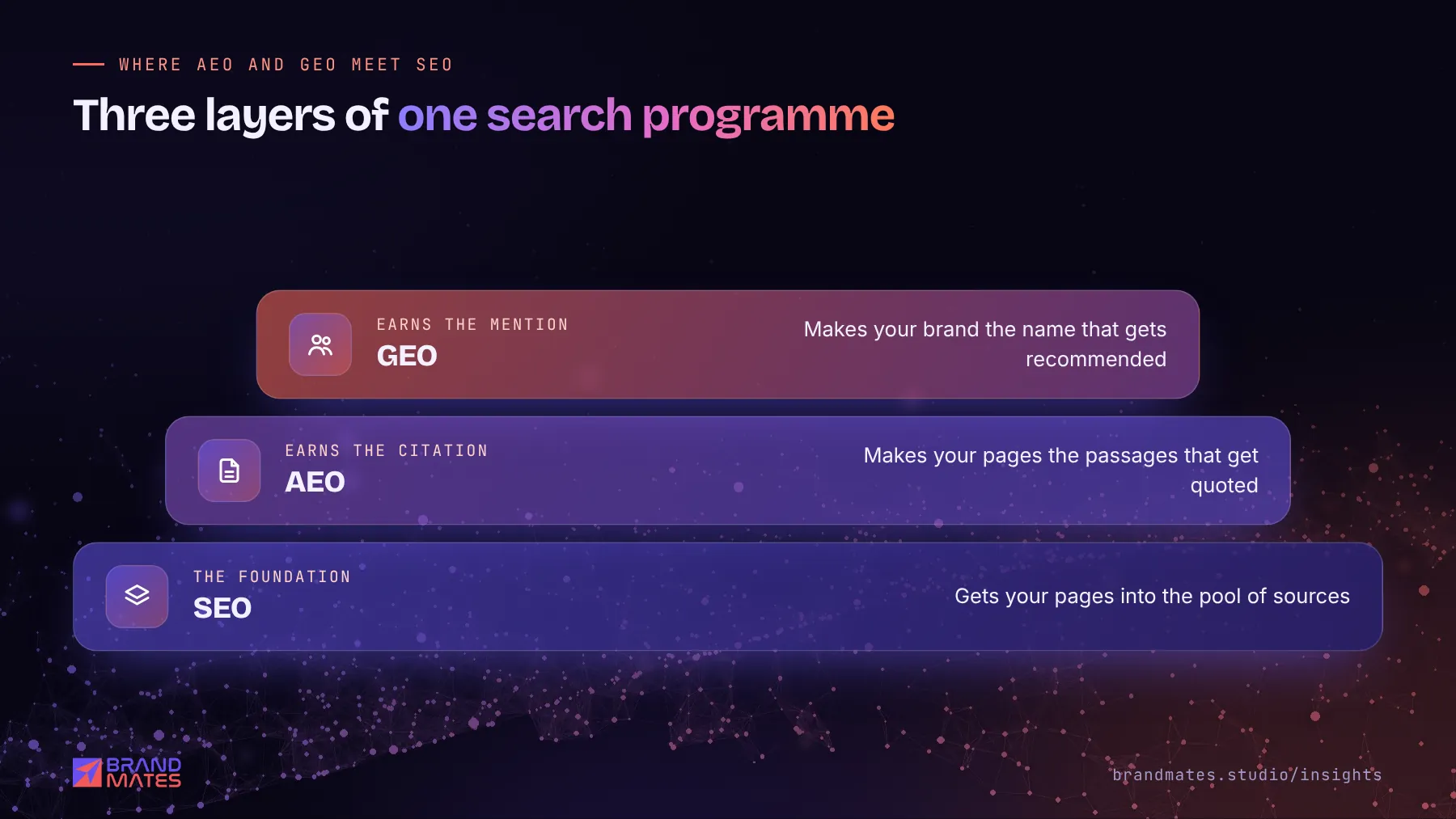
In short: AEO earns the citation, GEO earns the mention. Buyers need both before they pick up the phone.
Neither AEO nor GEO replaces search engine optimisation. Both sit on top of it.
AI assistants retrieve pages from search indexes before they write an answer. If your page is not crawlable, not indexed or not trusted, it never enters the pool of candidates. Google's own guidance for site owners, published in May 2026, makes the same point: the practices that help pages perform in Search are the ones that help them appear in Google's generative AI features, and no special files or markup are needed.
So the real picture looks like this:
If your foundation is weak, start with our complete SEO guide and fix the technical basics first.
Take a service page that opens with "We are a passionate team committed to excellence." There is nothing in that sentence for a machine to quote.
An answer ready version opens with: "We plan and run drone light shows for weddings, product launches and corporate events across India, with shows from 100 to 500 drones." That gives an assistant the service, the occasions, the geography and the scale in one line.
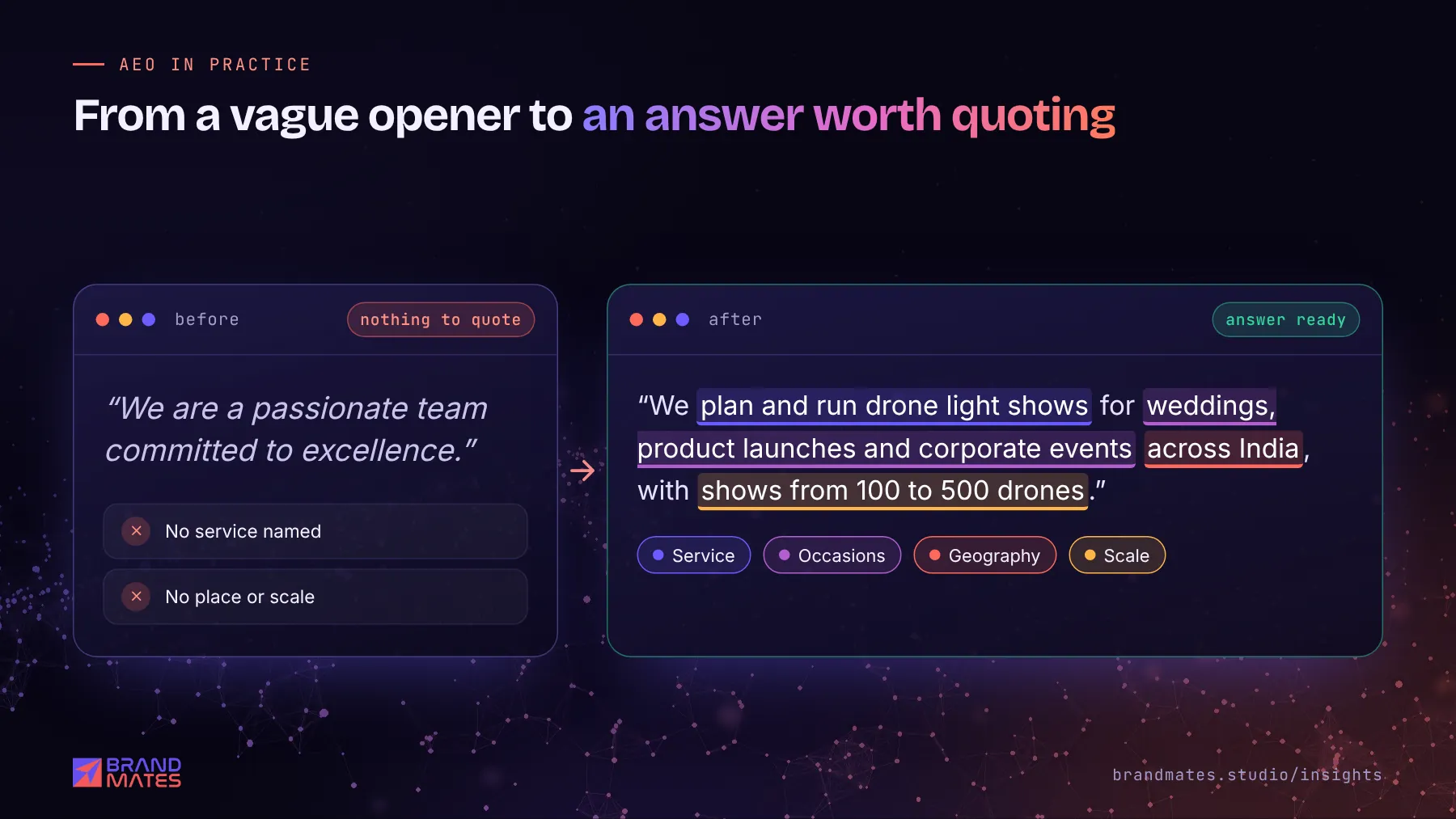
Repeat that thinking across every important page: put the answer first, make headings match questions and add facts a buyer would want to check. Our guide on how to write content AI assistants quote covers the structure in detail, and schema markup for AI search explains how to label it for machines.
Want to know if ChatGPT recommends you?We test your buyer questions across ChatGPT, Gemini, Perplexity and AI Overviews, then show you exactly what to fix.
GEO work happens mostly off your website. An assistant decides whether to name you based on what the wider web says about you.
That means auditing every place your business appears: Google Business Profile, directories, LinkedIn, marketplaces, review sites, press mentions and partner websites. Names, services, locations and descriptions should match. Then you add credible mentions over time through guest articles, case studies with partners, industry associations and real customer reviews.
This is closely related to what SEO practitioners call entity work, which we cover in entity SEO: how brand mentions build AI visibility.
Yes, and it is simpler to run them together than apart.
The same buyer often meets both in one session. They ask a direct question and see your page quoted (AEO). Then they ask for a shortlist and see your brand named (GEO). A brand that is quoted but never recommended looks like a blog, not a vendor. A brand that is recommended but never quoted has nothing to back up the recommendation.
The balance depends on your business:
| Business type | Lean more towards | Why |
|---|---|---|
| Local service business | GEO | Buyers ask for shortlists by city; reviews and listings drive mentions |
| Ecommerce store | AEO | Buyers ask product and comparison questions answered by product and collection pages |
| B2B or industrial company | Both equally | Buyers research specifications (AEO) and then ask for vendor shortlists (GEO) |
| Professional services | GEO | Trust and reputation decide who gets recommended |
At BrandMates Studio we run SEO, AEO and GEO as one programme with one plan and one report. Splitting them usually means three teams fixing the same pages in different directions.
For AEO, track which of your URLs are cited in AI answers and whether long, question style queries grow in Search Console.
For GEO, track how often your brand is named for a fixed set of shortlist and comparison prompts, and where it appears in the list. Our guide on how to check if ChatGPT recommends your brand includes a ready prompt list and tracking sheet.
For both, track visits and enquiries from AI assistants in Google Analytics 4 as their own channel.
On a smart TV brand's Shopify store, the work was mostly AEO: restructured collection and product pages, answer ready copy, and product and FAQ schema. Organic search users grew from 172 to 3,286 a month, comparing August 2026 with February 2026 in GA4. See the Shopify SEO case study.
If you want to know where you stand on SEO, AEO and GEO, request a free SEO and AI visibility audit. We check your pages, your citations and your brand mentions, then give you one prioritised plan. You can also explore our AI SEO services.
AEO focuses on making your page the source an AI system quotes when it answers a direct question. GEO focuses on making your brand one of the names an AI system includes when it generates a recommendation or shortlist. AEO earns the citation; GEO earns the mention.
No. AI assistants retrieve pages from search indexes before writing answers, so SEO remains the foundation. Google's own guidance says the same practices that help pages in Search help them appear in its generative AI features. GEO adds work on brand mentions and consistency on top of SEO.
It started there, but it now covers far more. AEO today applies to Google AI Overviews and AI Mode, ChatGPT, Perplexity, Gemini and Copilot, all of which extract passages from pages to build answers.
Fix the SEO foundation first, then do the AEO work on your most important pages, because it is fully within your control. Run GEO alongside it through consistent listings, reviews and mentions, which take longer to build.
No. The work overlaps heavily, and splitting it across providers usually creates conflicting changes. One team running SEO, AEO and GEO as a single programme, with one set of reports, is simpler and more effective.
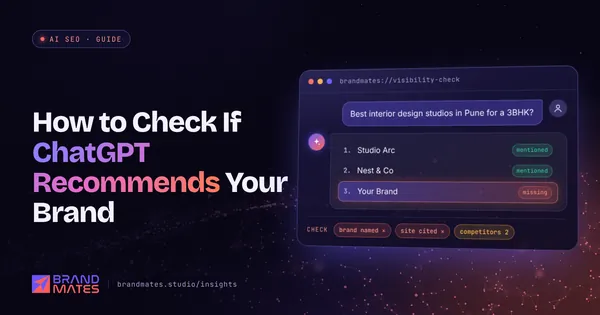
A simple, repeatable method to see whether ChatGPT, Gemini, Perplexity and Google AI answers name your business, which pages they cite and what to fix when they do not.
Read the guide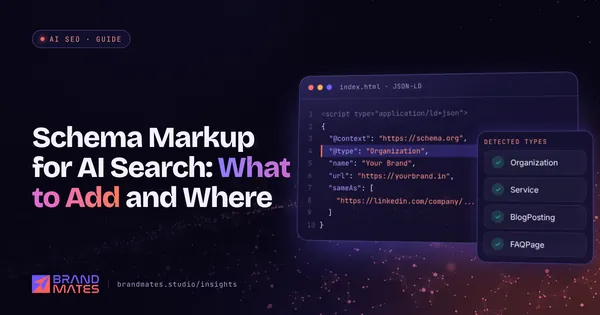
A page by page guide to the structured data that helps search engines and AI assistants understand your business, with a JSON-LD example, common mistakes and how to test it.
Read the guide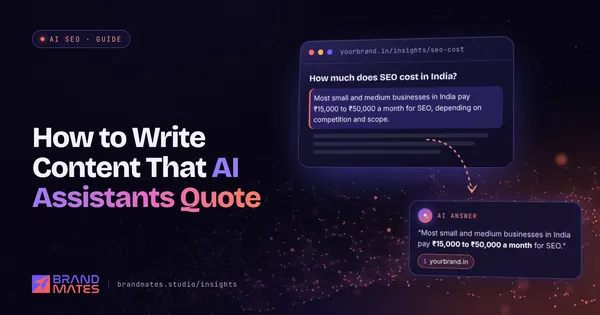
The structure, formatting and writing habits that make a page easy for ChatGPT, Gemini and Perplexity to extract, quote and cite, with a before and after rewrite.
Read the guideTell us where your brand needs to go. We'll come back with a free audit, a plan and a realistic timeline, usually within two working days.