How to Write Content That AI Assistants Quote
The structure, formatting and writing habits that make a page easy for ChatGPT, Gemini and Perplexity to extract, quote and cite, with a before and after rewrite.
Read the guideA page by page guide to the structured data that helps search engines and AI assistants understand your business, with a JSON-LD example, common mistakes and how to test it.
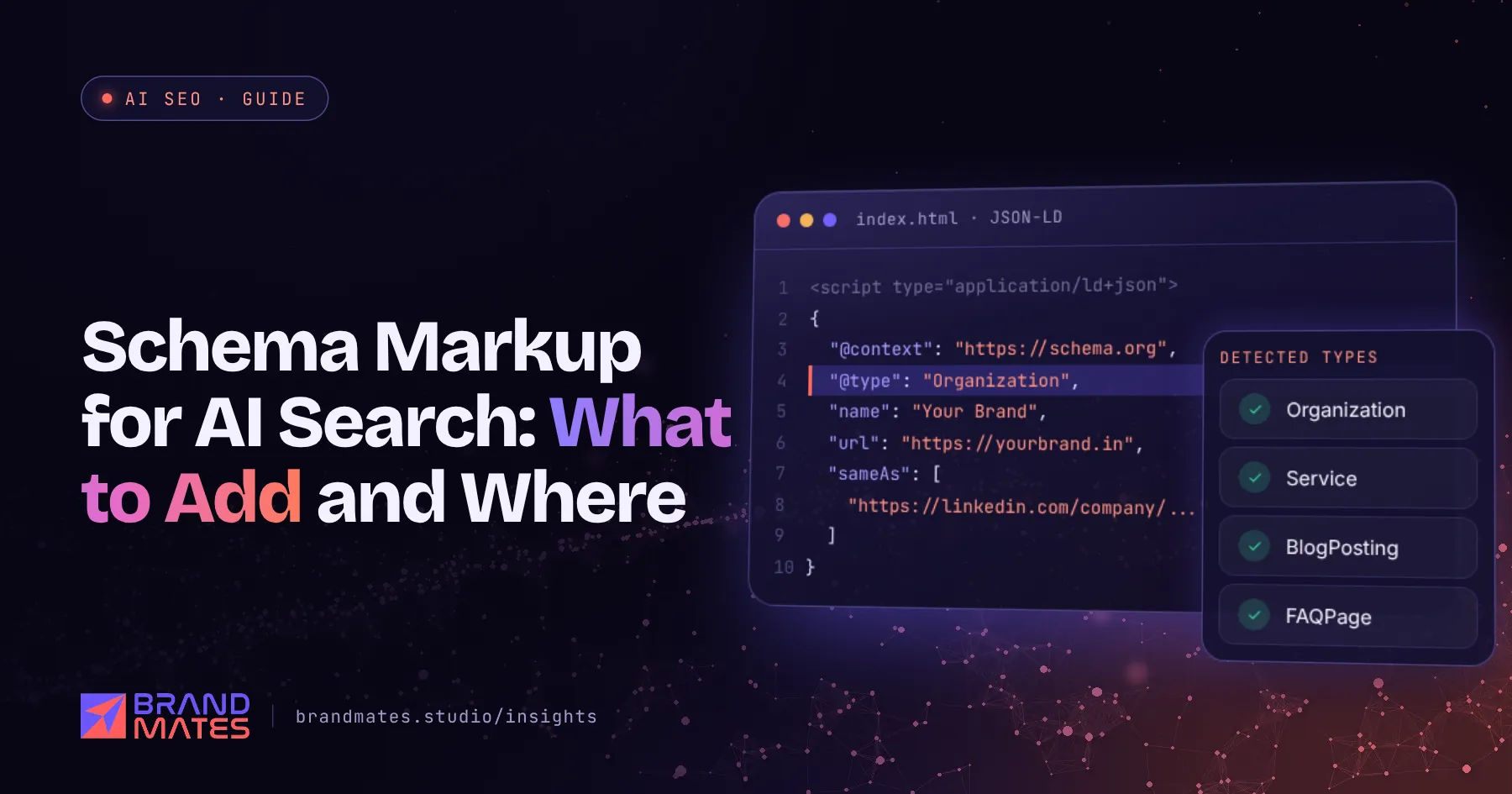
When an AI assistant reads your website, it has to work out what your business is, what you sell, where you operate and which page answers which question. Usually it guesses from the text. Structured data removes some of that guessing.
This guide explains how to use schema markup for AI search: what it is, what the platforms have said about it, which types to add on which pages, a working JSON-LD example and how to test it. It is part of our complete AI SEO guide, where structured data is step four of the framework.
Schema markup is a standard vocabulary, maintained at schema.org, for describing things on a web page in a format machines can read. Instead of a crawler inferring that "Greater Noida" is your location and "₹15,000" is a price, the markup states it explicitly.
The recommended format is JSON-LD: a small block of code inside a <script type="application/ld+json"> tag, usually in the page head. It does not change how the page looks to visitors.
It is worth being precise here, because the platforms have said different things.
Google says structured data is not required to appear in its generative AI features, and that there is no special schema.org markup to add for AI Overviews or AI Mode. Its May 2026 guidance for site owners puts the focus on helpful content, crawlability and good page experience. Google still uses structured data for rich results in regular search.
Microsoft puts more weight on it. At SMX Munich in March 2025, Fabrice Canel of the Bing team said schema markup helps Microsoft's large language models understand content. Bing's index also powers the web answers in Copilot.
Our view from client work: schema does not guarantee a citation, and no markup will rescue a weak page. What it does is remove ambiguity. It states your business name, services, products, prices, locations and official profiles in one consistent, machine readable place. That consistency supports everything else in AI SEO, especially entity SEO, and it costs very little to add.
| Page | Schema types | Key properties to include |
|---|---|---|
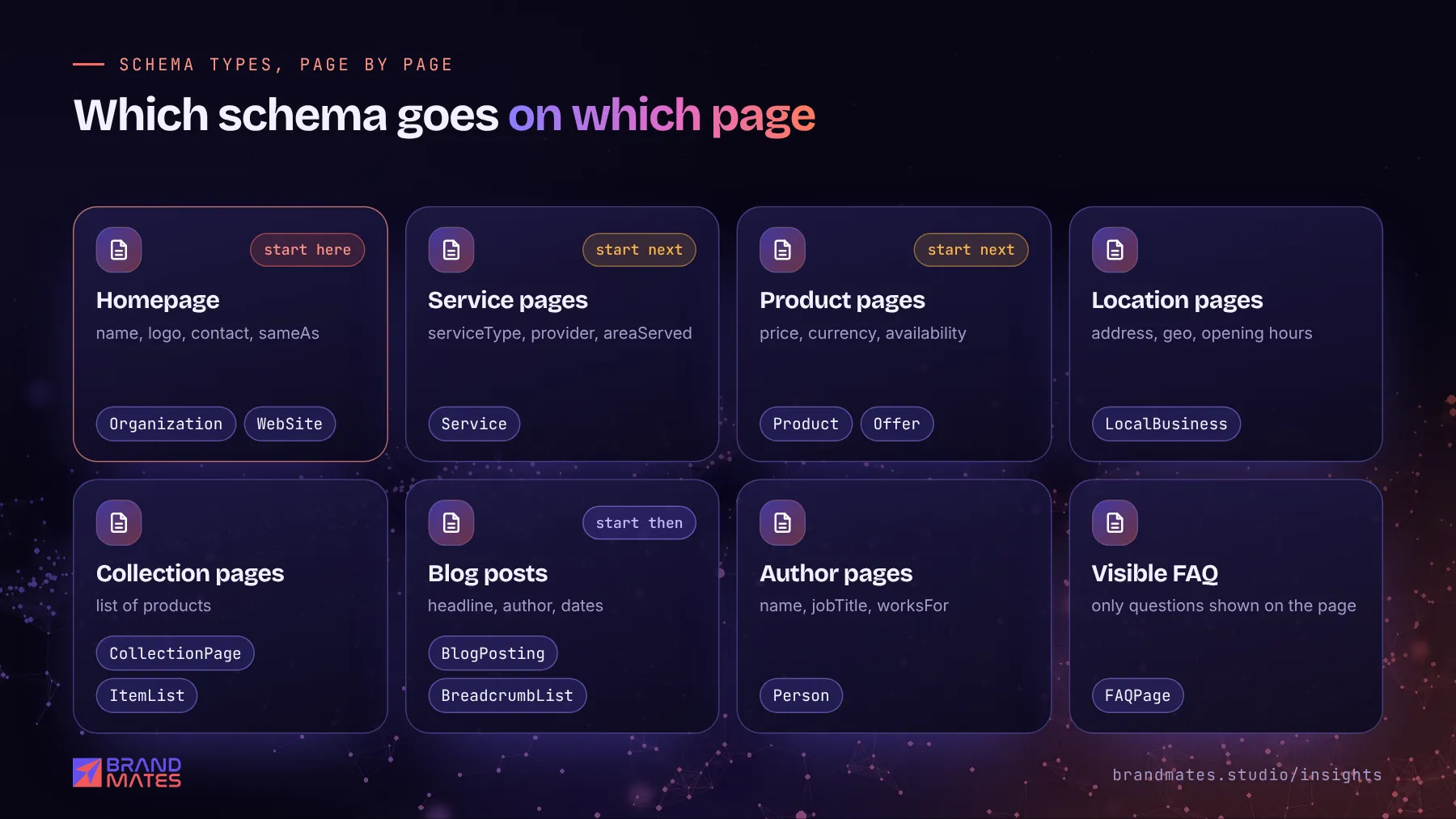
| Homepage | Organization (or LocalBusiness), WebSite | name, url, logo, description, contactPoint, sameAs, address |
| Service pages | Service | name, serviceType, provider, areaServed, offers or price range |
| Location pages | LocalBusiness or a specific subtype | address, geo, openingHours, telephone, areaServed |
| Product pages | Product with Offer | name, image, description, brand, sku, offers, price, priceCurrency, availability |
| Collection or category pages | CollectionPage, ItemList, BreadcrumbList | item list of products, breadcrumb trail |
| Blog posts and guides | Article or BlogPosting, BreadcrumbList | headline, author, datePublished, dateModified, image, publisher |
| Author or team pages | Person | name, jobTitle, worksFor, sameAs |
| Pages with a visible FAQ | FAQPage | each question and its answer, matching the visible text |
You do not need every type. Start with the homepage, then your highest value service or product pages, then content.
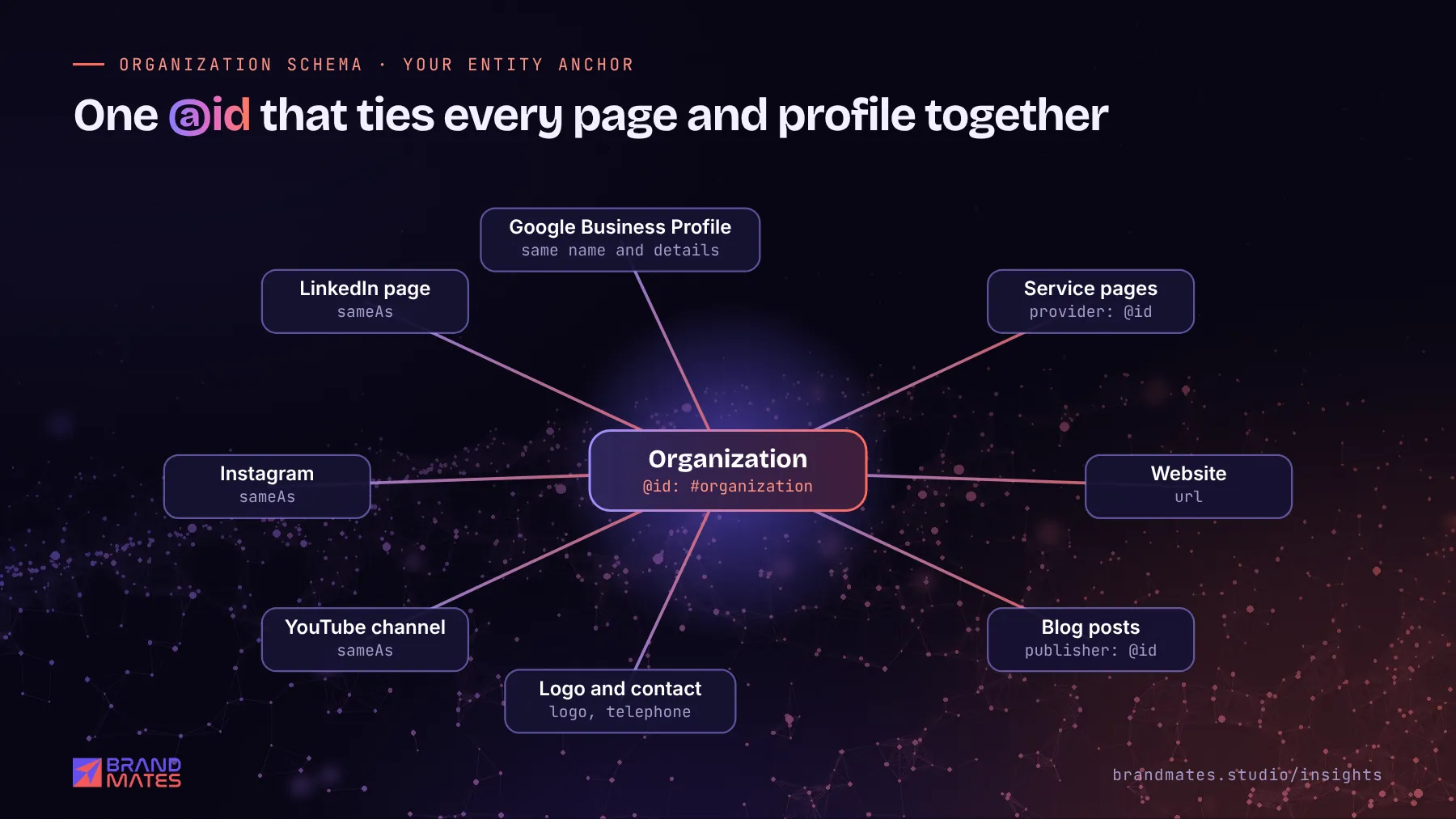
Organization schema on the homepage is the single most useful block, because it tells machines who you are and links your website to your official profiles elsewhere. Those sameAs links help systems connect your site, your Google Business Profile, LinkedIn page and other profiles into one entity.
Here is a working example using @graph to combine Organization and Service markup:
<script type="application/ld+json">
{
  "@context": "https://schema.org",
  "@graph": [
    {
      "@type": "Organization",
      "@id": "https://example.com/#organization",
      "name": "Example Events Co",
      "url": "https://example.com/",
      "logo": "https://example.com/images/logo.png",
      "description": "Drone light shows for weddings, product launches and corporate events across India.",
      "telephone": "+91 00000 00000",
      "sameAs": [
        "https://www.linkedin.com/company/example-events-co",
        "https://www.instagram.com/exampleeventsco",
        "https://www.youtube.com/@exampleeventsco"
      ]
    },
    {
      "@type": "Service",
      "name": "Wedding drone light shows",
      "serviceType": "Drone light show",
      "provider": { "@id": "https://example.com/#organization" },
      "areaServed": { "@type": "Country", "name": "India" },
      "url": "https://example.com/wedding-drone-shows"
    }
  ]
}
</script>
The @id lets other blocks on other pages refer back to the same organisation, so every service and article points to one consistent entity.
Service markup should describe what you actually sell, using the same name as the page heading. Include areaServed for the cities, states or countries you cover, and an offers block or price range if you publish pricing.
Product markup matters most for online stores. Include price, currency, availability, brand and real images. Keep it in sync with the visible page: a price in the markup that differs from the price on the page is a problem for both Google and buyers. Most Shopify themes output basic Product schema; check that it includes everything above and is not duplicated by an app.
LocalBusiness markup suits businesses with a physical location or a defined service area. Use the most specific subtype available, such as Dentist or RealEstateAgent, and match the name, address and phone number exactly to your Google Business Profile.
Want to know if ChatGPT recommends you?We test your buyer questions across ChatGPT, Gemini, Perplexity and AI Overviews, then show you exactly what to fix.
For guides and blog posts, BlogPosting or Article markup states the headline, author, publisher and dates. Person markup on an author page, with sameAs links to the author's professional profiles, connects content to a real expert. BreadcrumbList shows where each page sits in the site structure.
These types help machines understand who wrote what, when, and how your content fits together, which supports the topical structure described in our on page SEO checklist.
Google limited FAQ rich results to a small set of government and health websites in 2023, and stopped showing them in Search altogether in May 2026. So do not add FAQPage markup expecting extra space in Google results.
FAQPage is still valid schema.org vocabulary, and a visible FAQ built from real customer questions remains one of the most useful sections for buyers and for assistants, because each answer is a self contained passage. If you have a visible FAQ, marking it up is a low cost way to label it clearly. Never mark up questions that are not shown on the page. Our guide on how to write content AI assistants quote covers how to write the answers themselves.
application/ld+json to confirm the markup is in the HTML.Run these after any theme change, plugin update or site migration. Schema is often lost silently during redesigns, which is one reason it appears in our technical SEO checklist.
For a smart TV brand on Shopify, we added product and FAQ schema alongside restructured collection and product pages and answer ready copy. Comparing August 2026 with February 2026 in GA4, organic search users grew from 172 to 3,286 a month. Schema was one part of that work, not the whole of it, which is how it should be treated. See the Shopify SEO case study, or explore our ecommerce development work.
We review schema as part of every free SEO and AI visibility audit: what is present, what is missing, what conflicts and what each priority page needs. You can also see what our AI SEO services include.
Schema does not guarantee a citation, but it states your business details in a machine readable format and removes ambiguity. Microsoft has said schema helps its language models understand content. Google says no special schema is needed for its AI features, though it still uses structured data in regular search.
At minimum, Organization or LocalBusiness on the homepage with sameAs links to official profiles, Service or Product markup on each offering, BreadcrumbList across the site and Article or BlogPosting on content.
Google stopped showing FAQ rich results in May 2026, so it will not earn extra space in search results. It is still valid markup and can label a visible FAQ clearly for machines. Only mark up questions and answers that are visible on the page.
JSON-LD is the format Google recommends and the simplest to maintain, because it sits in one block of code and does not change your visible HTML. Place it in the HTML the server sends rather than adding it only through JavaScript.
Use the Schema Markup Validator to check for errors, Google's Rich Results Test to see eligibility for Google features, and Search Console's enhancement reports for site wide issues. Also view the page source to confirm the JSON-LD is present on the live page.
The structure, formatting and writing habits that make a page easy for ChatGPT, Gemini and Perplexity to extract, quote and cite, with a before and after rewrite.
Read the guide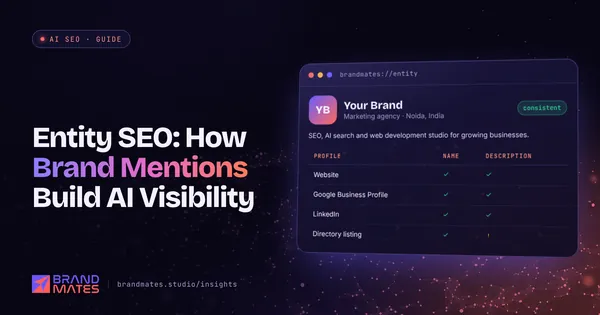
Why AI assistants recommend brands they can recognise and trust, and how to build the consistent descriptions, schema, mentions and reviews that make your brand an entity.
Read the guide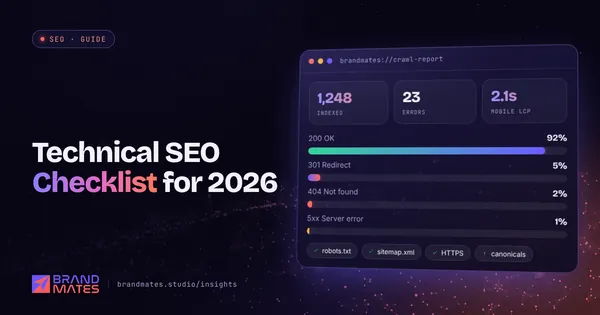
The technical checks that decide whether Google can crawl, index and load your site properly, grouped by priority with free tools for each one.
Read the guideTell us where your brand needs to go. We'll come back with a free audit, a plan and a realistic timeline, usually within two working days.