Everything a business owner or marketing team needs to understand about SEO in 2026: how Google ranks pages, what to fix first, how long it takes and how to measure it.
LB
By Lakshay Kr. BhatnagarFounder, BrandMates Studio
Published 10 min read
Key takeaways
SEO makes your website easier for search engines to crawl, understand and trust, so it ranks for buyer searches.
The four pillars are keyword research, on page SEO, technical SEO and authority from links and mentions.
Most businesses should plan for three to six months before SEO becomes a reliable lead source.
Measure organic users, Search Console clicks and organic leads, not rankings alone.
Every day, people search for exactly what your business sells. Some of them find you. Most of them find a competitor.
Search engine optimisation, or SEO, is the work of changing that. It is the process of making your website easier for search engines to find, understand and trust, so that it appears when people search for the products, services and answers you provide.
This guide is written for business owners and marketing teams who want to understand SEO properly: not the jargon, but how it works, what to do first and how to tell whether it is paying off. It is the hub of our SEO content library. Each section links to a deeper article on that topic.
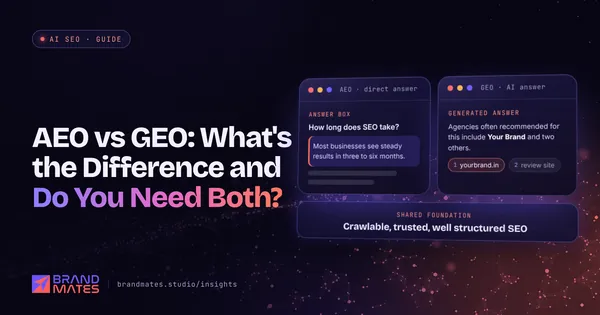
If you also want to be recommended by ChatGPT, Gemini and Perplexity, read this alongside our AI SEO guide. The two work together.
What is SEO and why does it matter?
When someone types a query into Google, Google tries to show the most useful, relevant and trustworthy pages for that query. SEO is everything you do to make your pages the ones it chooses.
The value is simple. Paid ads stop the day the budget stops. A page that ranks organically keeps bringing in visitors month after month without paying for each click. For most businesses, organic search becomes one of the lowest cost sources of qualified leads once it is working.
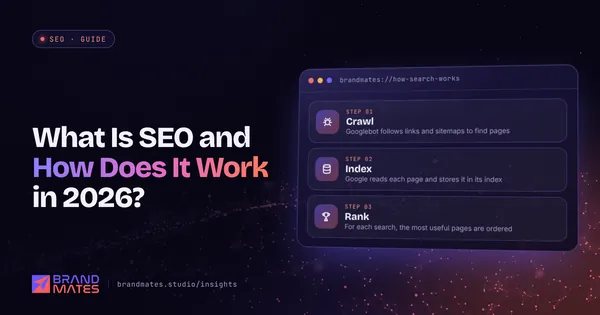
Crawling. Google's crawler, Googlebot, discovers pages by following links and reading sitemaps.
Indexing. Google analyses each page's content and stores it in its index. Pages that are not indexed cannot rank.
Ranking. When someone searches, Google selects and orders indexed pages based on hundreds of signals.
Those signals fall into a few broad groups: how relevant the page is to the query, how good and original its content is, how trustworthy the site is (much of which comes from links and mentions), and how good the experience is, including speed and mobile usability.
You do not need to know every signal. You need to get the fundamentals right in the order that matters.
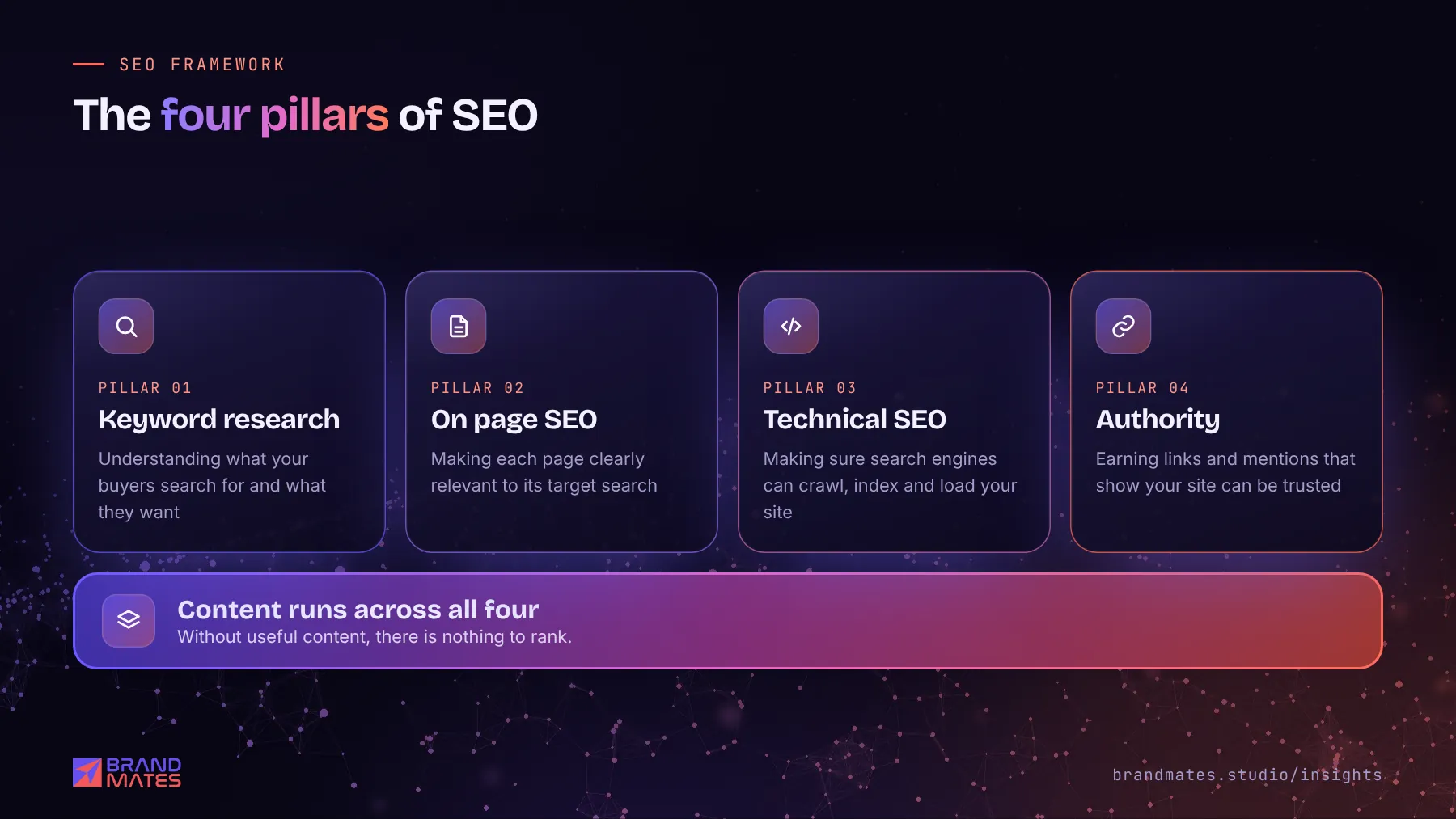
The four pillars of SEO
Pillar
What it covers
Deep dive
Keyword research
Understanding what your buyers search for and what they want
Content sits across all four. Without useful content, there is nothing to rank.
The four pillars of SEO, with content running across all of them
Keyword research: start with what buyers actually search
Every good SEO strategy starts with keyword research. The aim is not to find the highest volume words. It is to understand the searches your buyers make at each stage, and what they expect to find.
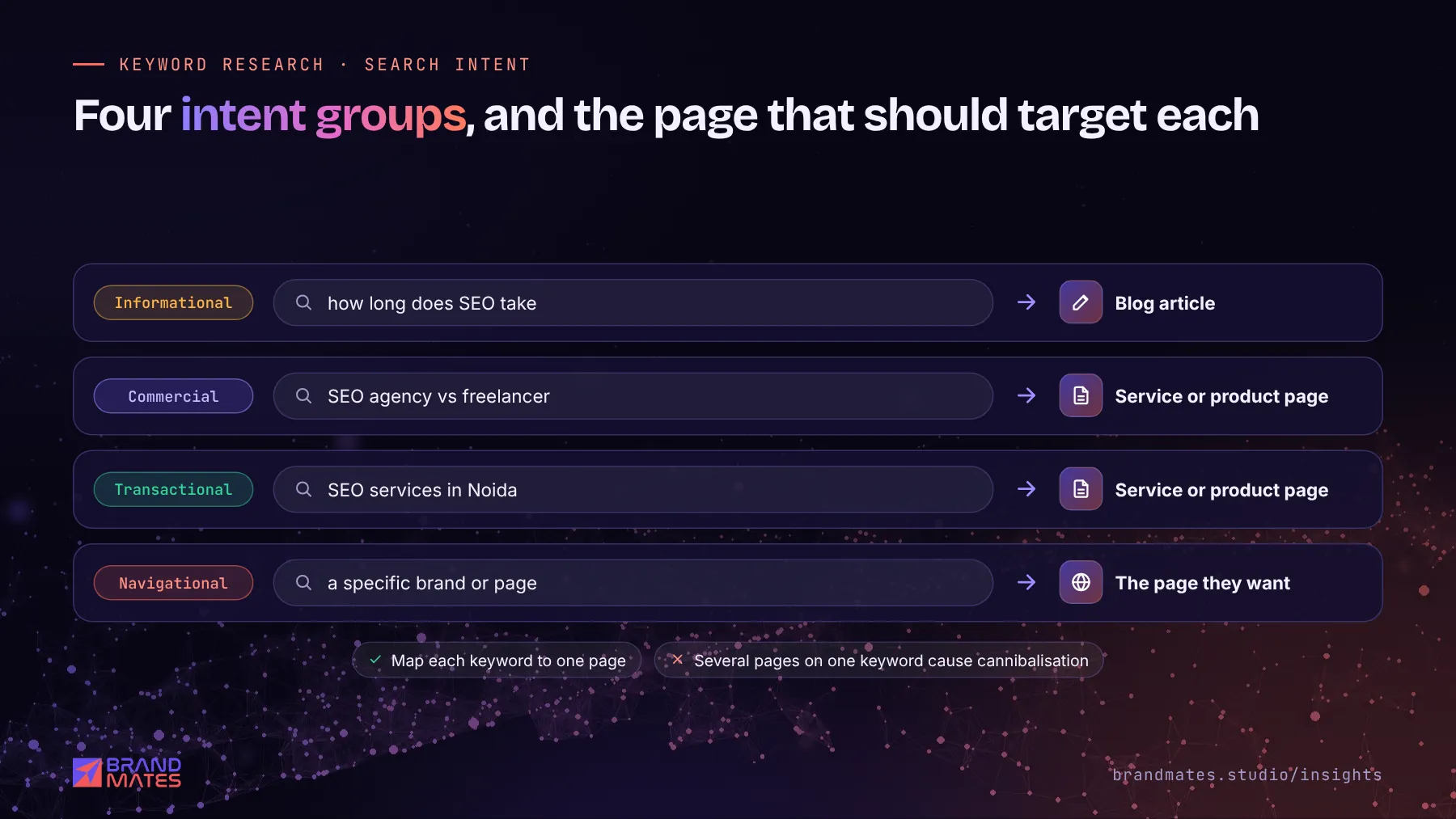
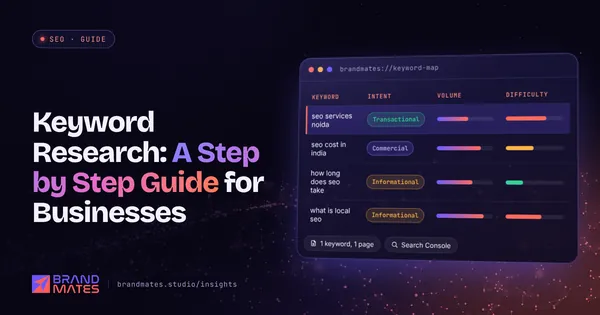
Keywords fall into four intent groups:
Informational: the person wants to learn ("how long does SEO take")
Commercial: the person is comparing options ("SEO agency vs freelancer")
Transactional: the person is ready to act ("SEO services in Noida")
Navigational: the person is looking for a specific brand or page
Service and product pages should target commercial and transactional searches. Blog articles should target informational ones and lead readers towards the pages that convert.
Match each search intent to the type of page that should rank for it.
The most expensive mistake is targeting the same keyword on several pages. They compete with each other, a problem called keyword cannibalisation, and none of them ranks well. Map each keyword to one page. Our keyword research guide walks through the full process with free and paid tools.
On page SEO: make every page clearly relevant
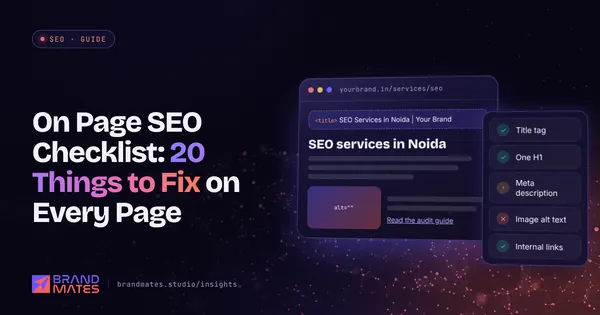
On page SEO is about making each page obviously relevant to the search it targets, for both readers and search engines. The essentials:
Title tag with the primary keyword, written to earn the click, within about 60 characters
Meta description that summarises the page and gives a reason to click, within about 160 characters
One clear H1 and logical H2 and H3 headings
Useful content that fully answers the search, in plain language
Internal links to and from related pages, using descriptive anchor text
Optimised images with descriptive file names and alt text
A clean URL that describes the page
None of this is complicated. Most sites simply never do it consistently. Our on page SEO checklist covers twenty specific checks for every page.
Technical SEO: make sure Google can crawl, index and load your site
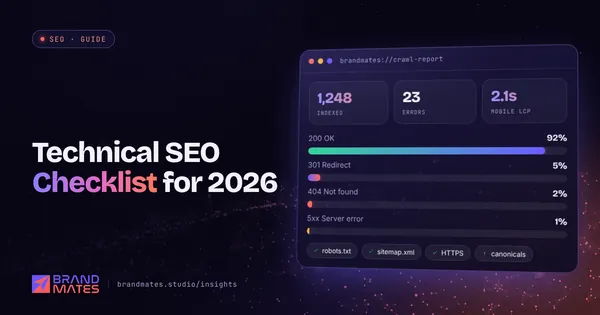
Technical SEO is the foundation. Great content on a site Google cannot crawl or index will never rank. The core areas:
Indexation: the right pages are indexed, the wrong ones are not
Crawlability: robots.txt, XML sitemaps and internal linking let Google find everything important
Site speed and Core Web Vitals: pages load fast and stay stable on mobile
Mobile usability: the site works properly on phones, which is how Google evaluates it
HTTPS, redirects and canonical tags: no broken chains, duplicates or security warnings
Structured data: schema markup that helps search engines and AI systems understand your content
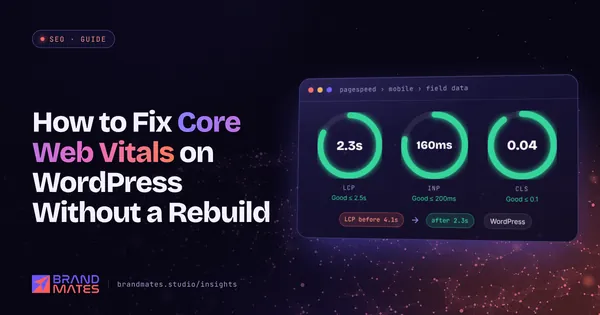
Speed deserves special attention. Google's Core Web Vitals measure loading (Largest Contentful Paint), responsiveness (Interaction to Next Paint) and visual stability (Cumulative Layout Shift). On one industrial manufacturer's WordPress site we brought LCP on a key page from 4.1 seconds to 2.3 seconds by fixing configuration rather than rebuilding. See how in our guide to fixing Core Web Vitals on WordPress, and work through the full technical SEO checklist.
Content: the reason pages deserve to rank
Google's guidance is consistent: it wants to rank content that is helpful, reliable and written for people. In practice that means:
Answer the search fully. If someone searches "SEO cost in India", give real ranges and explain what drives them.
Show experience. Real examples, real numbers, real screenshots. Generic advice is everywhere; first hand experience is not.
Be specific. Specific facts beat vague claims for readers, for Google and for AI assistants.
Keep it current. Update important pages when facts change.
Content clusters work particularly well. A central guide like this one covers a broad topic, and supporting articles each answer one specific question in depth, all linked together. This structure helps search engines understand the depth of your expertise.
Using AI to help draft content is fine if the result is accurate, original and useful. Publishing unedited AI output is not. We cover the line in does Google penalise AI content.
Free SEO audit
Not sure what is holding your site back?We check technical health, content, competitors and AI visibility, then send a prioritised fix list within two working days.
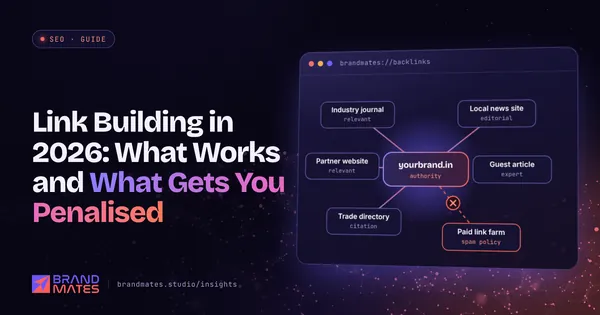
Search engines treat links from other reputable websites as votes of confidence. A site with strong, relevant links usually outranks a similar site without them.
What works in 2026:
Guest articles and expert commentary on relevant industry sites
Digital PR built around useful data, stories or tools
Industry directories and associations
Partner, supplier and client websites
Local citations for location based businesses
What does not work, and can get a site penalised: buying links that pass ranking value, link exchanges at scale, private blog networks and spammy automated links. Google's spam policies are explicit about this. Our link building guide explains how to build authority safely.
Local SEO for businesses that serve an area
If your customers come from a specific city or region, local SEO is likely your biggest opportunity. That means optimising your Google Business Profile, building consistent listings across directories, earning reviews and creating useful location pages. The map results at the top of local searches are where most calls come from. We cover it fully on our local SEO services page.
How long does SEO take?
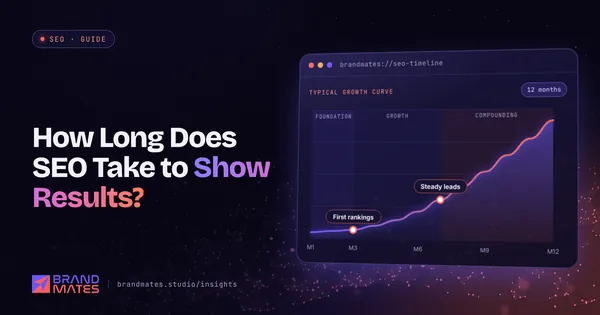
Google's SEO Starter Guide says some changes take effect within hours while others can take several months. In our experience, technical fixes can show movement within weeks, while content and authority compound over three to six months and beyond, depending on competition and your starting point.
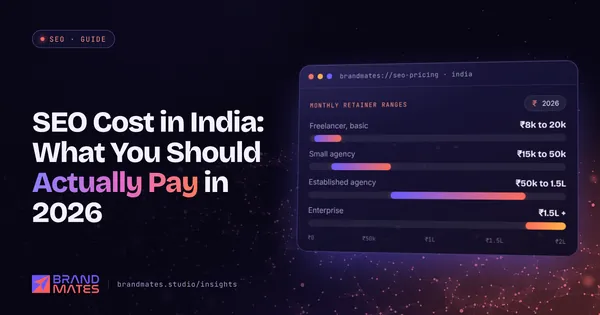
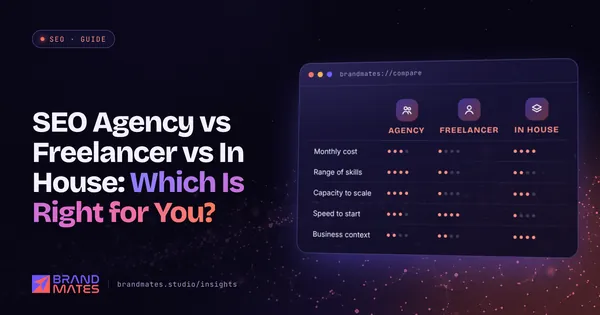
Prices vary widely, from small freelancer packages to large agency retainers. What matters is what is included, who does the work and how results are measured. We break down typical ranges in India and what you should expect at each level in SEO cost in India, and compare your options in SEO agency vs freelancer vs in house.
How to measure SEO
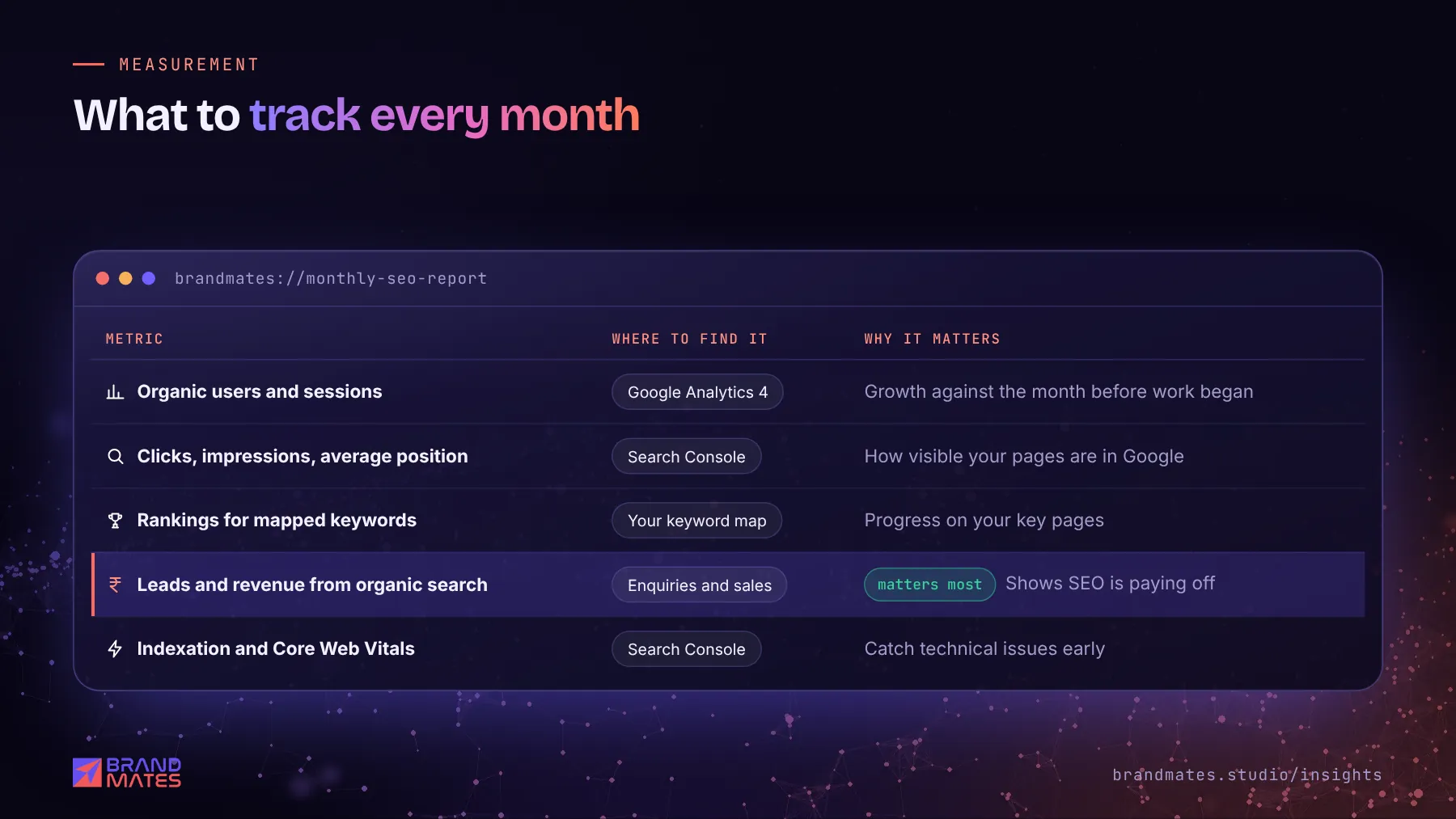
Track these every month:
Organic users and sessions in Google Analytics 4, against the month before work began
Clicks, impressions and average position in Google Search Console
Rankings for the keywords mapped to your key pages
Leads and revenue from organic search, which is the number that matters most
Indexation and Core Web Vitals, so technical issues are caught early
The five things to measure every month, with organic leads and revenue as the number that matters most.
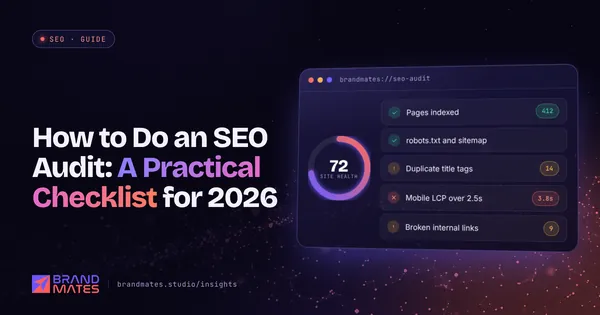
If you have never had your site reviewed, an audit is the right starting point. Our SEO audit checklist shows exactly what to check.
What SEO looks like on real accounts
A smart TV brand on Shopify. From 172 organic search users a month to 3,286, comparing August 2026 with February 2026 in Google Analytics 4, after technical fixes, keyword mapping across product and collection pages, schema and answer ready content. Read the Shopify SEO case study.
A drone light show company. Over six months, organic traffic grew 320%, top 10 rankings grew 185% and website enquiries grew 210%, built on keyword research by occasion and city, service page rewrites, event content and more than 45 quality backlinks. See the drone light show SEO case study.
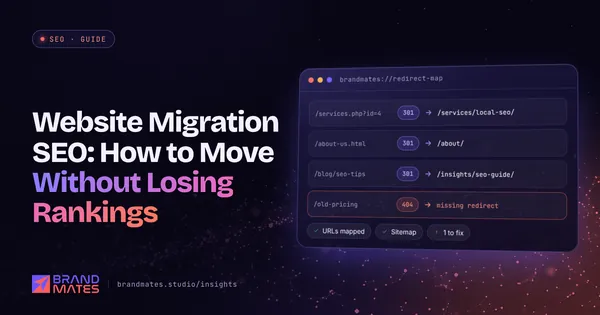
An industrial component manufacturer. Keyword research across 40 plus product pages, FAQ and schema work, a Core Web Vitals fix and SEO ownership of a full site migration with URLs preserved. See the industrial B2B SEO case study, and read our guide to website migration SEO if you are planning a rebuild.
Common SEO mistakes
Targeting keywords nobody searches, or everybody competes for. Good keyword research finds the realistic middle.
Publishing content without a plan. Random blog posts rarely rank. Clusters built around real questions do.
Ignoring technical health. One wrong robots.txt line or a broken redirect chain can undo months of content work.
Rebuilding a website without redirects. Site migrations are one of the most common causes of sudden ranking loss.
Buying cheap links. Shortcuts that break Google's policies tend to cost more than they ever deliver.
Measuring rankings instead of revenue. Rankings are a means. Leads and sales are the point.
SEO, or search engine optimisation, is the process of improving your website so it appears higher in search results for the searches your customers make. It covers keyword research, content, technical health and earning links from other reputable sites.
Yes. People still search Google for products and services every day, and AI assistants rely heavily on pages that are already well indexed and trusted. A strong SEO foundation now supports both traditional search and AI search visibility.
You can handle the basics yourself: completing your Google Business Profile, writing clear titles and descriptions, and publishing useful content. Technical SEO, migrations and authority building usually need specialist experience, especially in competitive categories.
Paid search means paying for each click on an ad, and traffic stops when the budget stops. SEO earns organic rankings that keep bringing visitors without paying per click, but takes longer to build. Most growing businesses use both.
Compare organic users, Search Console clicks and organic leads month by month against the period before work began. Rankings for your target keywords should rise steadily, and organic search should become a growing share of your enquiries.
Yes. We run technical SEO, on page optimisation, content, local SEO, authority building and AI search visibility as one programme with monthly reporting. Explore our SEO services, browse our SEO case studies or request a free SEO audit.
LB
Lakshay Kr. Bhatnagar
Founder, BrandMates Studio
Lakshay has spent more than eight years in SEO, answer engine and generative engine optimisation, performance marketing and content strategy, working with brands across India, the Netherlands, the US, Canada, New Zealand and Malaysia. He founded BrandMates Studio in 2025.
Keep reading
Pillar guide · 1 Oct 2026 · 13 min read
AI SEO in 2026: How to Get Recommended by ChatGPT, Gemini and Perplexity
How AI assistants choose which brands to recommend, and the complete framework we use to get businesses cited by ChatGPT, Gemini, Perplexity and Google AI Overviews.
A simple, repeatable method to see whether ChatGPT, Gemini, Perplexity and Google AI answers name your business, which pages they cite and what to fix when they do not.
AEO vs GEO: What's the Difference and Do You Need Both?
Answer Engine Optimization and Generative Engine Optimization explained in plain language, how they differ, how they overlap with SEO and how to run them together.