SEO Agency vs Freelancer vs In House: Which Is Right for You?
A clear comparison of hiring an SEO agency, a freelancer or an in house team, with costs, trade offs, when each one fits and the questions to ask before you sign.
Read the guideA realistic month by month SEO timeline, the six factors that decide how fast results arrive, and the early signals that show it is working.
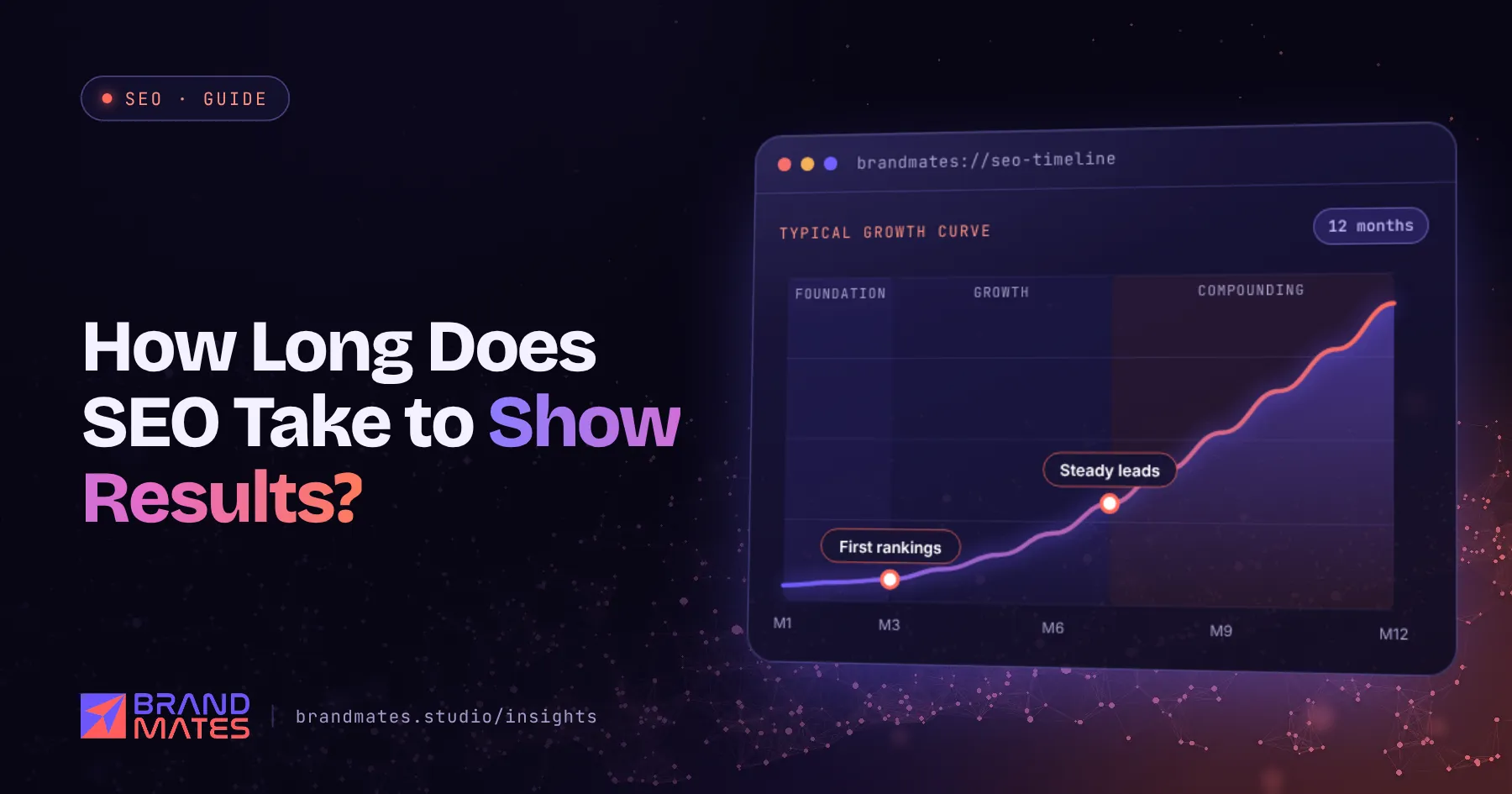
Every business owner who starts SEO asks the same thing within the first month: when will this start working?
The real answer is that it depends, but "it depends" is not useful on its own. This guide explains how long SEO takes in realistic terms, what happens month by month, which factors speed it up or slow it down, and the early signals that tell you it is working before the leads arrive. It is part of our complete SEO guide for businesses. If you are new to the topic, start with what SEO is and how it works.
Google's SEO Starter Guide says some changes might take effect in a few hours, while others could take several months, and suggests waiting a few weeks before judging whether a change worked. For a full SEO programme, most businesses should think in months, not weeks.
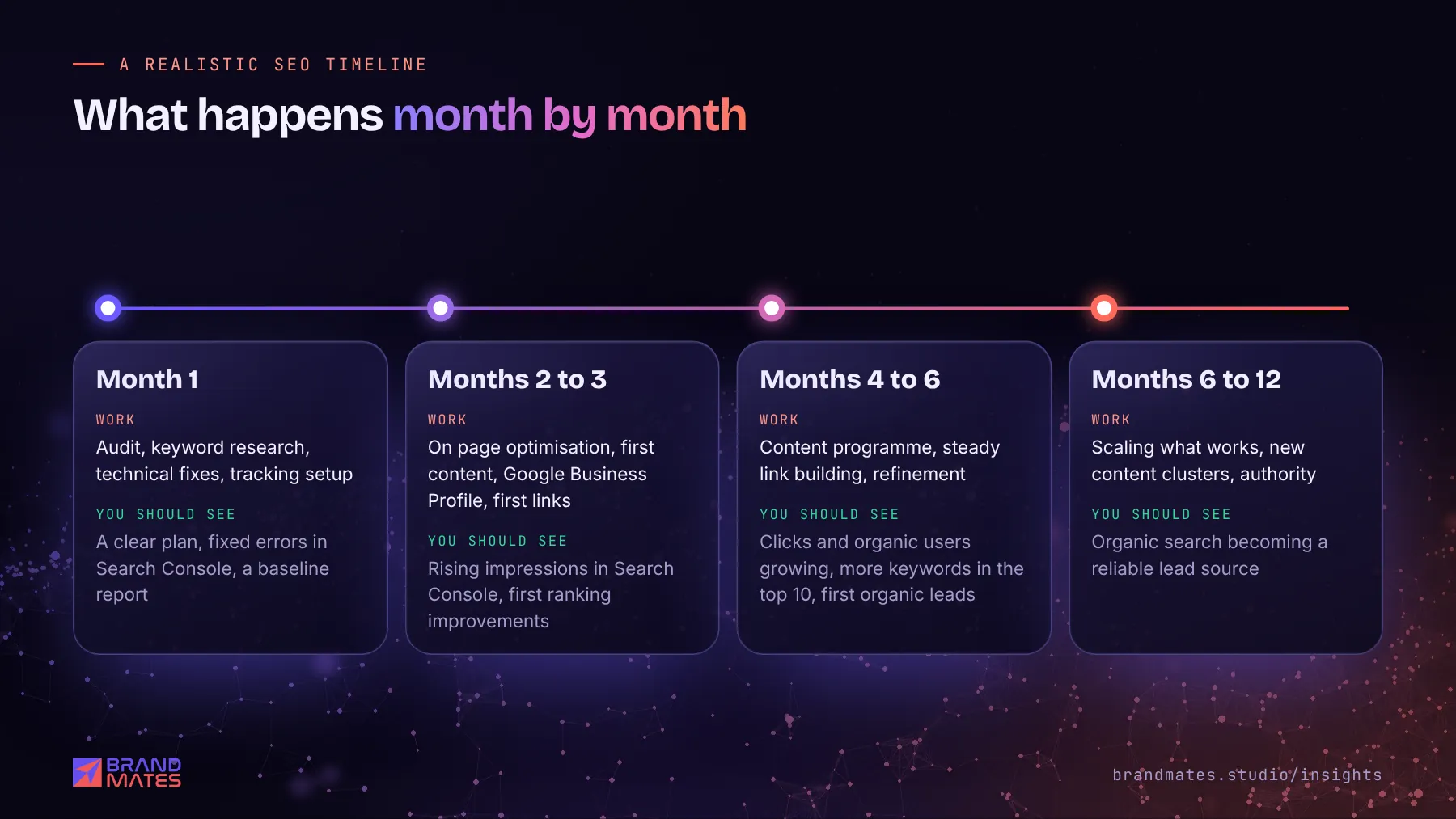
In our experience across Indian and international accounts:
| Period | What is happening | What you should see |
|---|---|---|
| Month 1 | Audit, keyword research, technical fixes, tracking setup | A clear plan, fixed errors in Search Console, a baseline report |
| Months 2 to 3 | On page optimisation, first content, Google Business Profile, first links | Rising impressions in Search Console, first ranking improvements |
| Months 4 to 6 | Content programme, steady link building, refinement | Clicks and organic users growing, more keywords in the top 10, first organic leads |
| Months 6 to 12 | Scaling what works, new content clusters, authority | Organic search becoming a reliable lead source |
The first two months often feel slow because most of the work happens below the surface. That is normal, and it is why setting expectations early matters.
A site with technical problems, thin content and no backlinks needs more foundation work than a healthy site. On the other hand, sites with serious technical issues sometimes see the fastest early gains, because fixing a blocking problem can release rankings that were held back.
An SEO audit at the start tells you which situation you are in.
Ranking a dental clinic in a small city is very different from ranking an online store against national brands. The more established your competitors are, the more content and authority you need, and the longer it takes.
New domains with no links take longer to earn trust. Established sites with some existing authority usually move faster once they are optimised.
Two articles and five links a month will move more slowly than eight articles and twenty links. The pace of results tracks the pace of work, which is one reason SEO cost varies so much between packages.
Slow pages, crawl errors and indexation problems hold everything back. Our technical SEO checklist covers what to fix.
Long, specific keywords ("drone light show for a wedding in Jaipur") rank faster than broad, competitive ones ("drone show"). A good strategy targets both: quick wins early, competitive terms over time. Our keyword research guide explains how to balance them.
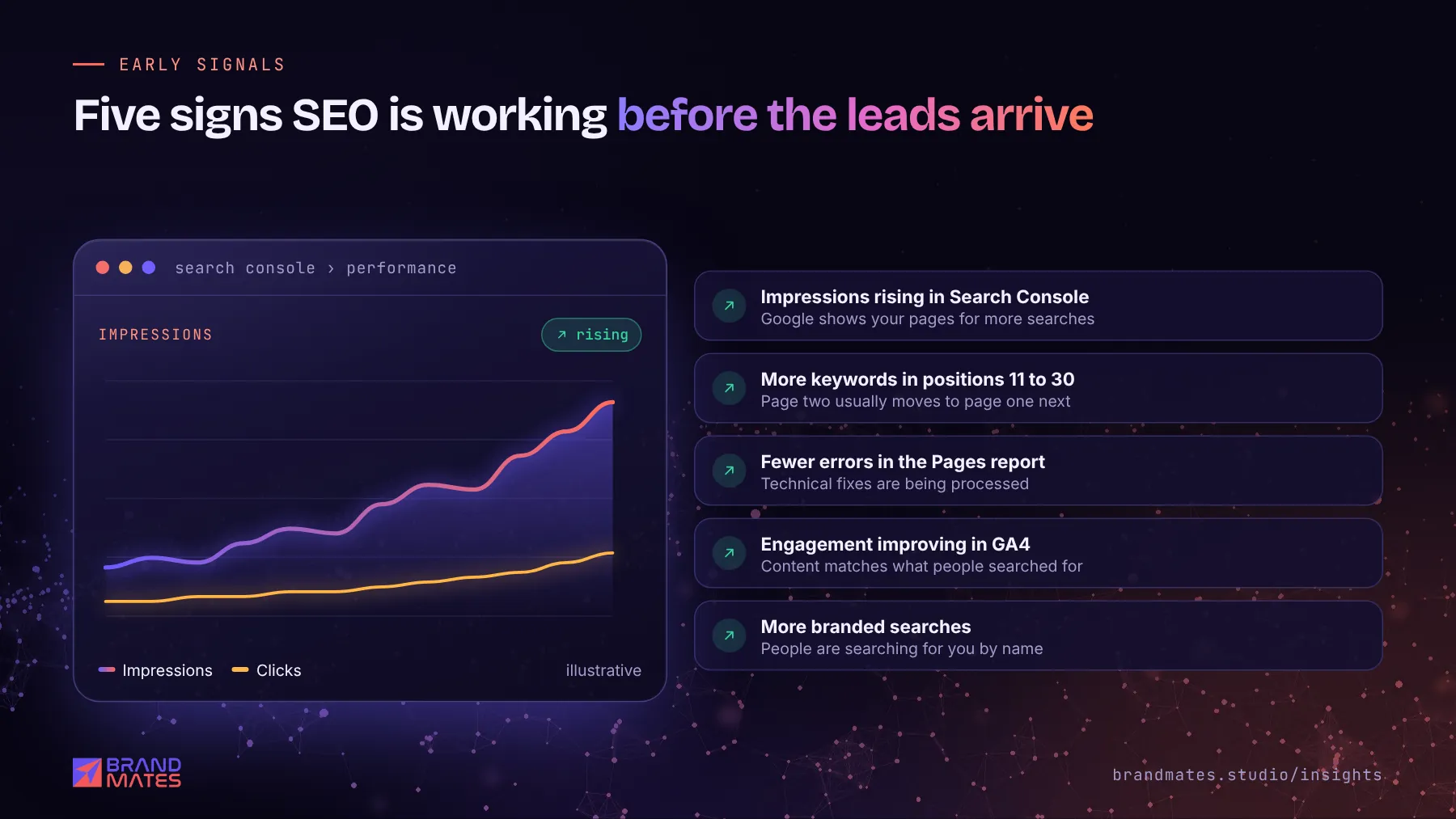
Leads are the goal, but they are a lagging indicator. Watch these earlier signals:
Not sure what is holding your site back?We check technical health, content, competitors and AI visibility, then send a prioritised fix list within two working days.
A drone light show company saw organic traffic grow 320%, top 10 rankings grow 185% and website enquiries grow 210% over a six month project, built on keyword research by occasion and city, rewritten service pages, event content and more than 45 quality backlinks. See the drone light show SEO case study.
A smart TV brand on Shopify grew from 172 to 3,286 organic search users a month, comparing August 2026 with February 2026 in GA4, after technical fixes, keyword mapping and schema. See the Shopify SEO case study.
Both followed the same pattern: slow early months while the foundation was built, then accelerating growth.
Some things do speed it up:
What does not speed it up: buying cheap links, publishing large amounts of thin AI content or anything else that breaks Google's spam policies. Those shortcuts tend to cost months later. See what Google allows with AI content.
Being recommended by ChatGPT, Gemini and Perplexity follows a similar timeline. Technical access and structured data can take effect within weeks, while consistent recommendations depend on authority and mentions that build over months. Our AI SEO guide explains the full process.
Plan for three to six months before SEO becomes a reliable source of leads, and six to twelve months in competitive categories. Measure the early signals so you know it is working before the leads arrive, and choose a partner who will give you a realistic timeline rather than a guarantee.
If you want a timeline estimate for your own site, request a free SEO audit and we will tell you what to expect based on your competition and starting point. You can also explore our SEO services.
New websites usually take longer, often six months or more, because they have no authority or history with Google. Starting with specific, lower competition keywords and a strong technical foundation helps early progress.
Three months is still early in most categories. Check Search Console for rising impressions and keywords moving up from page two. If nothing is moving, there may be a technical issue, a keyword strategy problem or too little work being done each month.
Local SEO can move faster than national SEO. Fixing a Google Business Profile and inconsistent listings can improve map visibility within weeks, while reviews, citations and local content compound over three to six months.
Rankings usually hold for a while after work stops, but competitors keep improving and content gets outdated. Over time, rankings tend to slip. Most businesses keep a lighter maintenance level of SEO rather than stopping completely.
It can take anywhere from a few hours to a few weeks. Submitting the URL through Search Console's URL Inspection tool and linking to it from existing pages usually speeds it up.
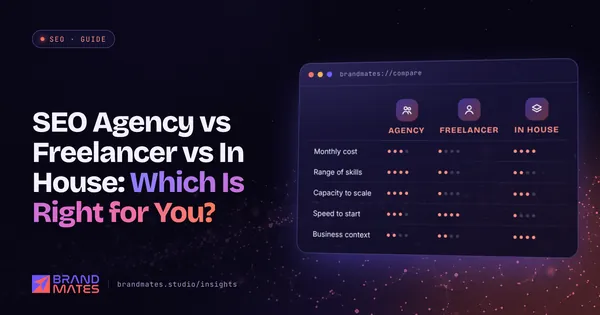
A clear comparison of hiring an SEO agency, a freelancer or an in house team, with costs, trade offs, when each one fits and the questions to ask before you sign.
Read the guide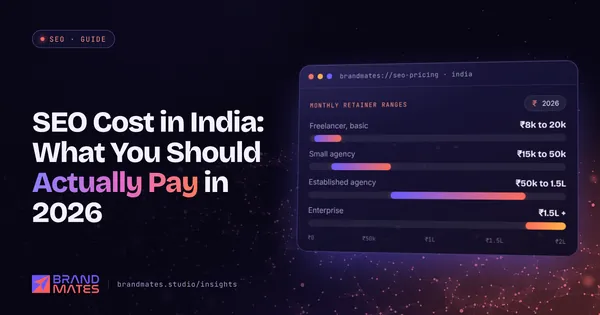
Typical monthly SEO price ranges in India, what you get at each level, what drives the price up or down, and the red flags that signal a bad deal.
Read the guide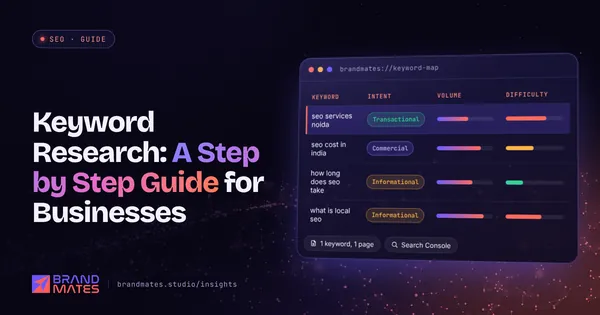
How to find the searches your buyers actually make, sort them by intent, map each one to the right page and decide what to target first.
Read the guideTell us where your brand needs to go. We'll come back with a free audit, a plan and a realistic timeline, usually within two working days.